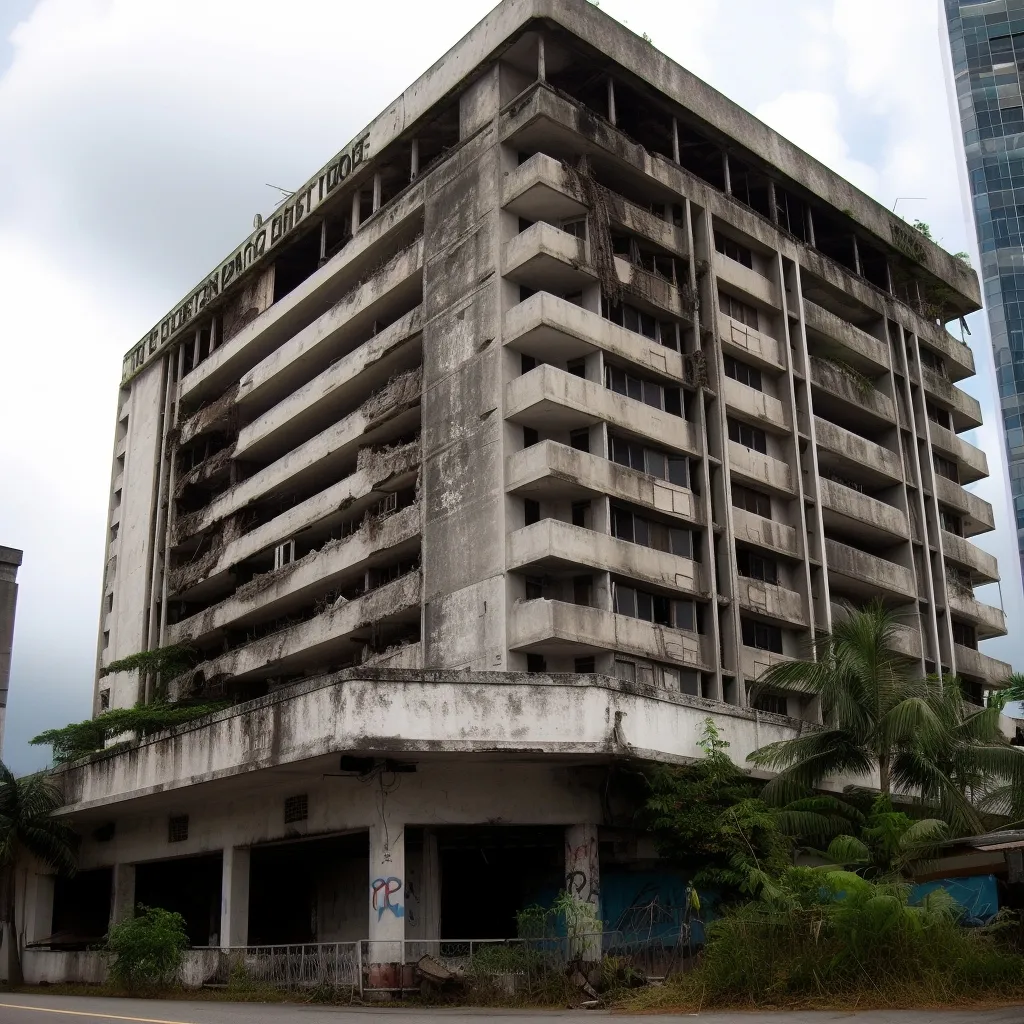
How to Find and Evaluate a Distressed Property for Renovation
Where distressed and vacant properties come from in Nova Scotia and California (tax sales, foreclosures, receiverships) and how to check one before you bid.
Updated & fact-checked Figures are linked to their sources at the end of the article.
A distressed property is one whose owner can no longer carry it: the taxes are in arrears, the mortgage is in default, the business that ran it is insolvent, or the owner has died or walked away. The building itself is often run down too, because the money for upkeep ran out before the money for the debt did.
These properties can be bought below what a well-kept equivalent would cost, but the discount pays for real risks: limited access before the sale, little or no information from the seller, unknown repair costs and, in some cases, a former owner’s right to take the property back. This guide explains where distressed property comes from in Nova Scotia and California, the two places UBU Financial works, and what to check before you commit. It is for investors who are new to distressed deals.
Where distressed properties come from
Most distressed property reaches the market through one of four routes. Each has its own seller, its own way of selling and its own risks for the buyer.
Property tax sales. In Nova Scotia, a municipality may start tax sale proceedings once a year’s taxes are unpaid, and, with some exceptions, it must put a property up for sale once taxes are three years in arrears. The treasurer sells at public auction or, with council’s consent, by tender.[1] Halifax is governed by its own charter rather than the Municipal Government Act, but its redemption rules are the same.[2] Halifax posts its tax sale lists and results online.[3] In California, the county tax collector gains the power to sell property that has been tax-defaulted for five years, or three years for nonresidential commercial property (a county can choose to keep the five-year period for commercial property).[9] Most of these sales are public auctions run by the county.[10]
Mortgage enforcement. In Nova Scotia, foreclosure goes through the Supreme Court under Civil Procedure Rule 72. The court’s order provides for a sale by public auction, conducted by the sheriff or someone the court appoints, or for a private sale the judge approves.[5] In California, a lender whose mortgage or deed of trust contains a power of sale can sell without going to court. It must record a notice of default, wait at least three months, and then give at least 20 days’ notice of the sale.[6][7] At a California trustee’s sale, the trustee can require bidders to show they can pay the full bid in cash or by cashier’s check.[8]
Receivership. When a business that owns property is insolvent, a secured creditor can ask a Canadian court to appoint a receiver under the Bankruptcy and Insolvency Act to take control of the property and the business.[11] Hotels, apartment buildings and shopping centres owned by a single company often come to market this way, sold by the receiver with the court’s approval. California courts can also appoint receivers, including in a lender’s foreclosure action.[16]
Estates and long-term vacancy. Some properties are distressed only in the physical sense: an owner has died and the estate wants a quick sale, or a building has been empty for years. These are ordinary sales, usually through a broker or the executor, but the building may need the same inspections as any other run-down property.
| Route | Who sells | How it is sold | Points for the buyer |
|---|---|---|---|
| Tax sale (Nova Scotia) | Municipal treasurer | Public auction or tender | Owner and lenders can redeem within six months; title is free of encumbrances once the deed issues |
| Tax sale (California) | County tax collector | Usually public auction; also sealed bid or sale to a public agency or nonprofit | Sale only after five years of default (three for nonresidential commercial) |
| Foreclosure (Nova Scotia) | Sheriff or court appointee, under a court order | Public auction or court-approved private sale | Court process; the owner can redeem until the sale |
| Trustee’s sale (California) | Trustee under the deed of trust | Public auction, outside court | Three-month wait after the notice of default, then at least 20 days’ notice; bids paid in full in cash or equivalent |
| Receivership | Court-appointed receiver | Under the court’s supervision, often by negotiated sale | More information than at an auction, but still sold largely as is |
The redemption period: the risk many first-time buyers miss
A Nova Scotia tax sale does not give the buyer a secure property on day one. The owner, a mortgage holder or anyone else with an interest in the land can redeem it within six months after the sale, unless the taxes were more than six years in arrears at the time of sale.[1][2]
If the property is redeemed, the buyer gets back the price paid, interest at 10% a year, taxes paid since the sale, fire insurance premiums, and the cost of necessary repairs, but only repairs that the treasurer approved in writing. Any rent the buyer collected is deducted.[1] Once six months have passed without redemption, the buyer can ask the municipality for the tax deed, which vests the land in the buyer free and discharged from all encumbrances, with some exceptions such as existing easements.[1]
How to evaluate a distressed property before you bid
Distressed sellers rarely give warranties. A tax collector, sheriff or receiver usually knows little about the building’s condition, and you may not get inside before an auction. That shifts the work onto you. Treat the steps below as a minimum, and walk away from any property where you cannot complete the ones that matter for it.
A pre-bid checklist
Confirm the sale process and its terms
Read the notice of sale or the court order: deposit, payment deadline, whether the sale is as is, and any redemption right. Missing a payment deadline at an auction can cost you the deposit.
Search the title and registered charges
In Nova Scotia, land ownership and registered documents are searched through Property Online, usually by a lawyer. In California, check the county recorder. Find out which mortgages, liens and judgments survive the sale and which are wiped out.
Check what is owed to the municipality
Order a tax certificate (Halifax charges $125 for one) and ask about water, sewer and local improvement charges, which can attach to the property.
Look for orders against the building
Ask the municipality about outstanding building, fire, dangerous-premises or unsightly-premises orders. An order may require costly work on a deadline.
Inspect what you can, and price what you cannot
If you can get access, bring a building inspector or contractor and look at the roof, structure, water damage, plumbing, electrical and heating. If you cannot, assume the worst for the systems you could not see and price that into your bid.
Screen for contamination
For commercial property, a Phase I environmental site assessment is the usual first step. Former gas stations, dry cleaners and buildings with oil tanks need extra care.
Check zoning and permitted use
Confirm that the use you plan (more units, a conversion, a change of use) is allowed, and whether a long vacancy has affected any non-conforming use rights.
Arrange insurance and financing before the sale
Vacant and run-down buildings can be hard to insure and finance. Find an insurer and a lender before you bid, not after you win.
The tax certificate fee above is Halifax’s current online price.[4] Property Online, Nova Scotia’s land registry search service, requires a subscription and a user agreement.[15]
Environmental risk
In the U.S., the EPA recognizes the ASTM E1527-21 standard for Phase I environmental site assessments as meeting its “all appropriate inquiries” rule. Following it is how a buyer can qualify for protection from liability as an innocent landowner under the federal Superfund law.[12][13] In Nova Scotia, contaminated sites are governed by the provincial Contaminated Sites Regulations, which came into effect in July 2013.[14] Lenders on commercial property commonly ask for a Phase I report in both countries, so it is worth ordering one early.
Judging whether the numbers work
Once you know what you are buying, the arithmetic is the same as for any renovation project:
- Estimate the value after renovation, based on recent sales or the rent and expenses of comparable, well-kept properties nearby.
- Subtract the full cost of getting there: the purchase price, closing costs and transfer tax, the renovation budget with a contingency, carrying costs (interest, taxes, insurance and utilities) during the work and lease-up, and selling costs if you plan to sell.
- Compare what is left with the risk you are taking. A thin margin on a building you could not inspect is a reason to walk away.
Buying at auction versus buying from a receiver or lender by agreement
Public auction
- Price set by bidding on the day
- Little or no access before the sale
- Payment terms are fixed and short
- Few or no conditions allowed
- A tax sale buyer may face a redemption period
Negotiated sale
- Price negotiated, often after marketing by a broker
- Usually some access for inspections
- More time to arrange financing
- Some conditions may be possible, subject to court approval
- Still sold largely as is, with few representations
Sources
- Municipal Government Act, S.N.S. 1998, c. 18 (sections 134, 141, 152 and 156) — Nova Scotia Legislature, Consolidated to April 9, 2026. Checked 2026-10-12.
- Halifax Regional Municipality Charter, S.N.S. 2008, c. 39 (section 167) — Nova Scotia Legislature. Checked 2026-10-12.
- Property Tax Sales — Halifax Regional Municipality. Checked 2026-10-12.
- Property Tax Certificates — Halifax Regional Municipality. Checked 2026-10-12.
- Nova Scotia Civil Procedure Rules, Rule 72: Mortgages (official consolidation) — The Courts of Nova Scotia, June 19, 2026. Checked 2026-10-12.
- California Civil Code § 2924 (statute text, copy hosted by FindLaw) — FindLaw, Current as of January 1, 2026. Checked 2026-10-12.
- California Civil Code § 2924f (statute text, copy hosted by FindLaw) — FindLaw, Current as of January 1, 2026. Checked 2026-10-12.
- California Civil Code § 2924h (statute text, copy hosted by FindLaw) — FindLaw, Current as of January 1, 2026. Checked 2026-10-12.
- California Revenue and Taxation Code § 3691 (statute text, copy hosted by FindLaw) — FindLaw, Current as of January 1, 2026. Checked 2026-10-12.
- Public Auctions and Bidder Information — California State Controller’s Office. Checked 2026-10-12.
- Bankruptcy and Insolvency Act, R.S.C. 1985, c. B-3, section 243 — Justice Laws Website, Government of Canada. Checked 2026-10-12.
- ASTM E1527-21: Standard Practice for Environmental Site Assessments: Phase I Environmental Site Assessment Process — ASTM International. Checked 2026-10-12.
- Brownfields All Appropriate Inquiries — U.S. Environmental Protection Agency. Checked 2026-10-12.
- Contaminated Sites — Nova Scotia Environment and Climate Change. Checked 2026-10-12.
- Land and property (Property Online) — Government of Nova Scotia. Checked 2026-10-12.
- California Code of Civil Procedure § 564 (statute text, copy hosted by FindLaw) — FindLaw, Current as of January 1, 2026. Checked 2026-10-12.